

Table of Contents
This is one of those questions that comes up in almost every marketing meeting. Someone asks how often the brand should be posting, and everyone in the room has a slightly different opinion based on something they read once. The truth is there isn’t a single number that works for every business, but there are patterns that hold up across most platforms, and knowing them can save you a lot of guesswork.
The short answer
For most brands, posting three to five times a week on the main platforms is a reasonable starting point. Some platforms reward more frequent posting, others punish it if the content feels rushed or repetitive. Consistency tends to matter more than raw volume. A brand that posts four solid times a week, every week, usually does better long term than one that posts daily for two weeks and then disappears for a month.
Recommended posting frequency by platform
| Platform | Suggested Frequency | Notes |
| 3 to 5 times a week | Stories can be posted daily without hurting reach | |
| 3 to 4 times a week | Organic reach is limited regardless of frequency | |
| 2 to 4 times a week | Quality and relevance matter more here than volume | |
| X (Twitter) | 1 to 3 times a day | The feed moves fast, so more frequent posts are normal |
| TikTok | 3 to 5 times a week | Newer accounts often benefit from posting more often early on |
| 3 to 5 pins a week | Content has a much longer shelf life than other platforms |
These numbers shift depending on your industry and how much support you have for creating content. A solo founder posting three times a week consistently is in a better position than a team trying to force daily posts they can’t sustain.
Why consistency beats frequency
Social platforms tend to favor accounts that show up reliably over accounts that post in bursts. When you disappear for weeks and then post five times in one day, the algorithm and your audience both notice, and usually not in a good way. It’s better to pick a realistic schedule you can actually stick to for months, even if that means posting less often than you originally planned.
This is also why so many social media calendars fall apart. People plan for an ambitious daily schedule, run out of ideas or time by week three, and then quietly stop posting altogether. A smaller, steady schedule almost always outperforms a big plan that collapses after a month.
What actually decides the right frequency for you
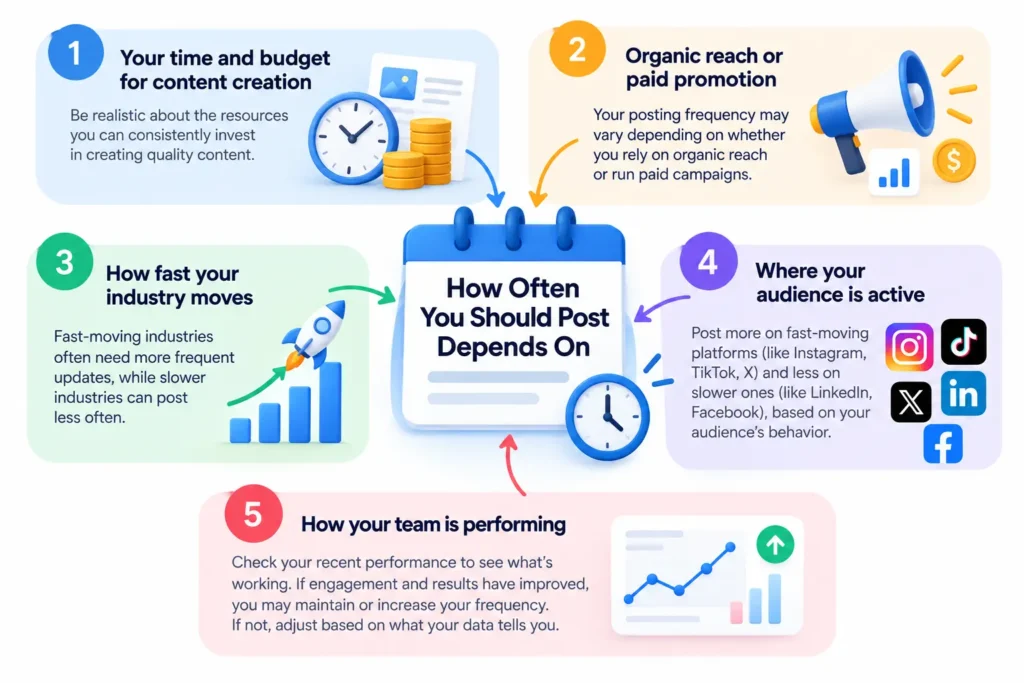
- How much time and budget you have for content creation
- Whether you are relying on organic reach or mostly running paid promotion
- How fast your industry moves and how often you genuinely have something worth sharing
- Whether your audience is more active on fast moving platforms or slower ones
- How your team is currently performing compared to a few months ago
Rather than copying a competitor’s schedule, it helps to track your own engagement and adjust from there. If posting five times a week isn’t getting more engagement than posting three times, that’s useful information, not a failure.
Posting frequency and where that traffic actually goes
One thing that often gets overlooked is what happens after someone clicks through from a social post. Posting more often only helps if the page people land on can actually turn that interest into a lead or a sale. If you’re driving traffic from social to a landing page and the conversions aren’t there, the posting schedule usually isn’t the problem. It’s worth reviewing our guide on landing page optimization tips to make sure the page on the other end of your links is actually set up to convert that traffic, instead of letting it go to waste.
When it’s worth bringing in outside help
Keeping up a consistent posting schedule across multiple platforms takes more time than most people expect, especially once you add planning, design, captions, and actually reviewing how each post performed. A lot of businesses reach a point where handling this in house starts pulling attention away from everything else that needs to get done. That’s usually when it makes sense to bring in a team that manages the whole thing day to day. Our
social media marketing services are built to handle exactly that, from planning a realistic schedule to creating content and tracking what’s actually working, so you get consistency without it eating up your week.
The Bottom line
There is no universal number that works for every brand on every platform. What matters more is picking a schedule you can realistically maintain, paying attention to how your specific audience responds, and adjusting from there instead of chasing someone else’s routine. Three to five posts a week is a solid starting point for most businesses, but the real answer is whatever frequency you can keep up consistently without burning out or letting quality slip.
Leave a Reply